
Bhuk — Ordering, Kitchen & POS
One restaurant system instead of three subscriptions: the customer's menu with live prep times, the kitchen's ticket board with honest timers, the cashier's tap-tile POS with splits and bKash — and a dispatch view that batches riders by the same order states. Every bill's arithmetic reconciles on every screen, because in a kitchen a wrong number is a wrong plate. Flagship blueprint: runs the studio's own supper-club nights; restaurant deployments in 4–7 weeks.
The product itself, on every device
studio renders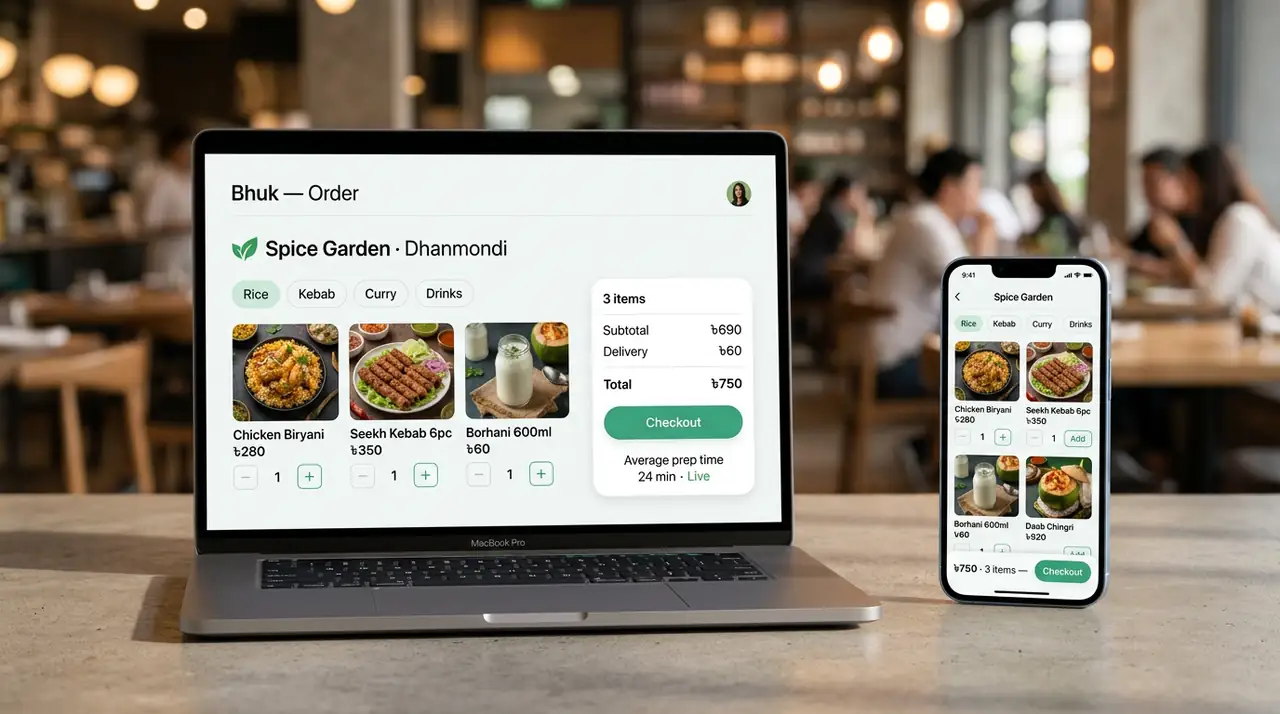
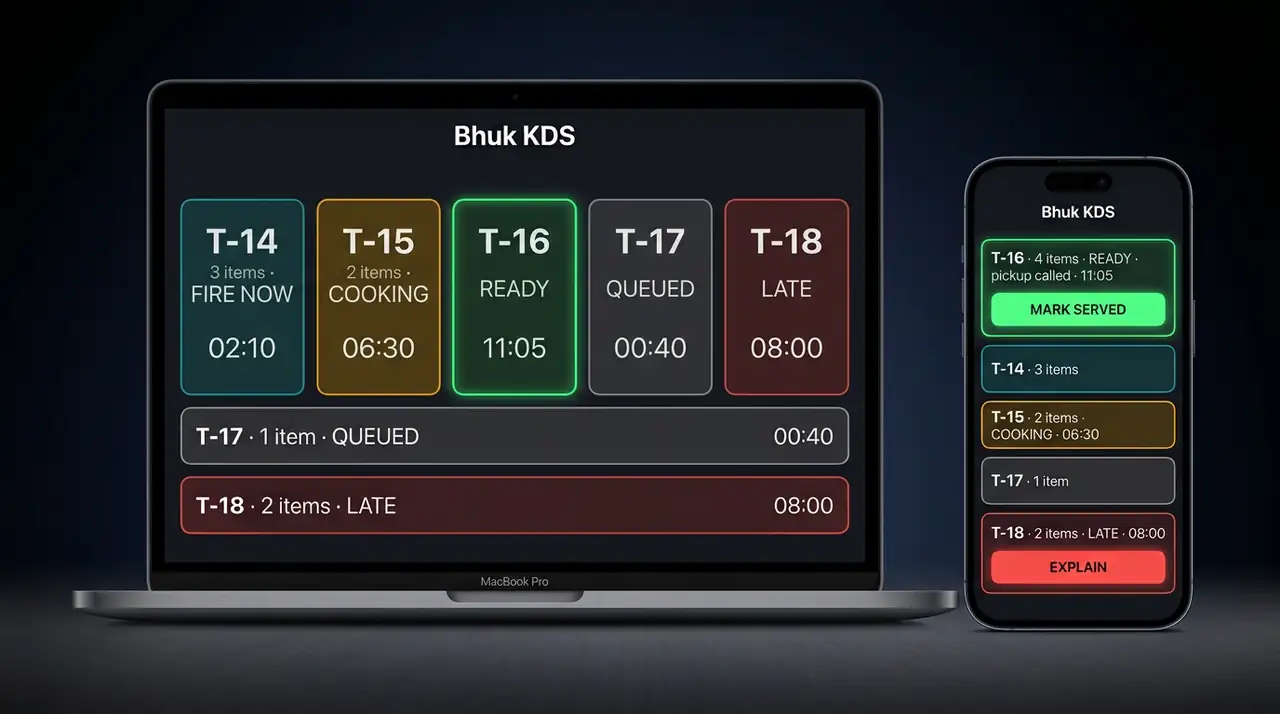
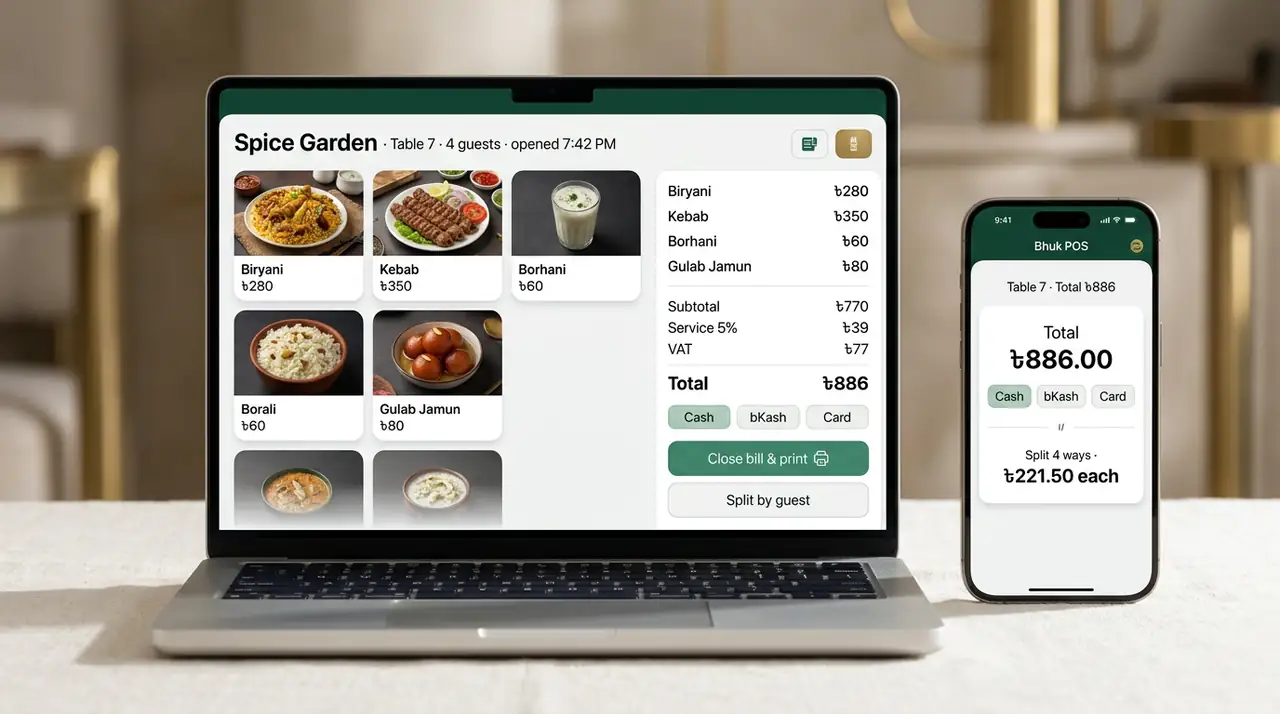
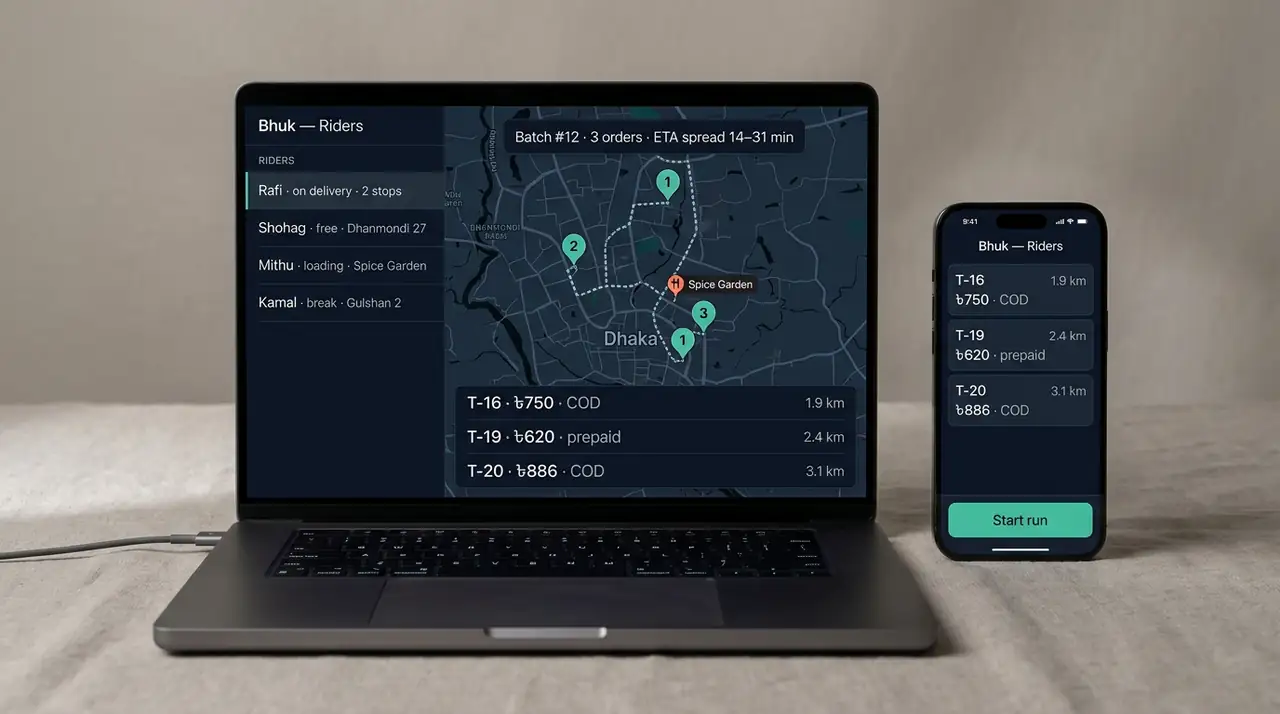
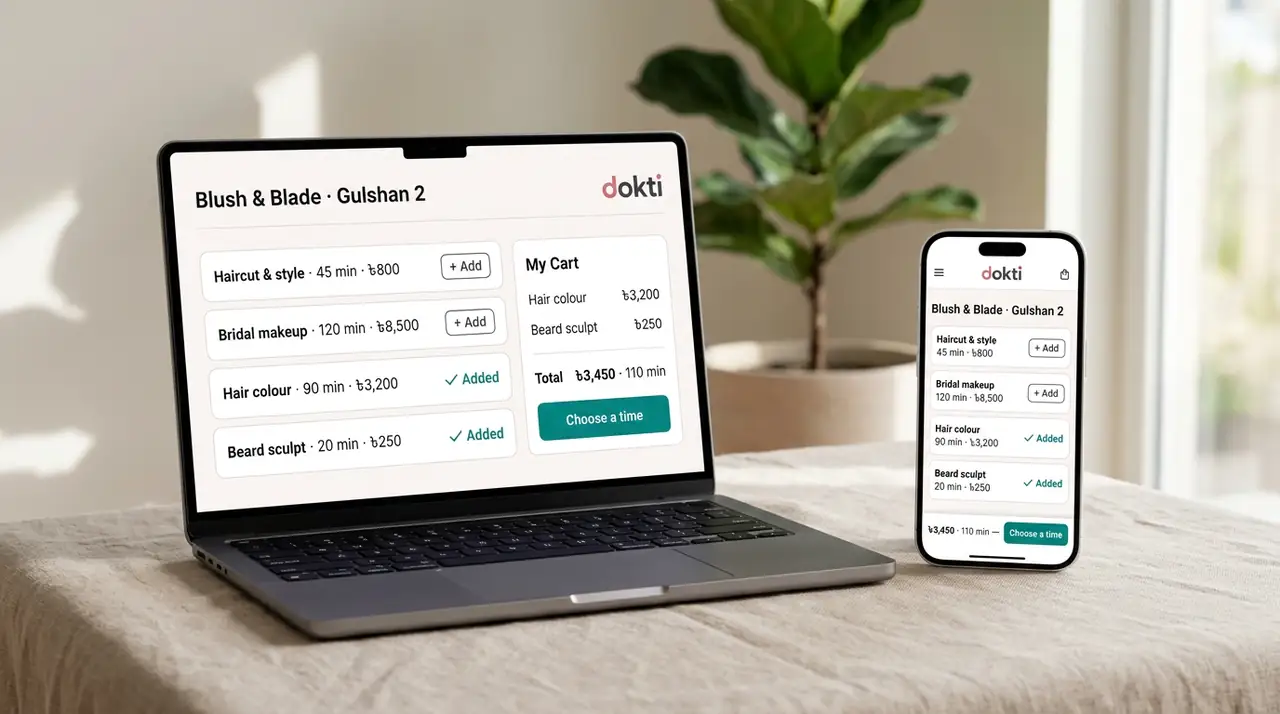
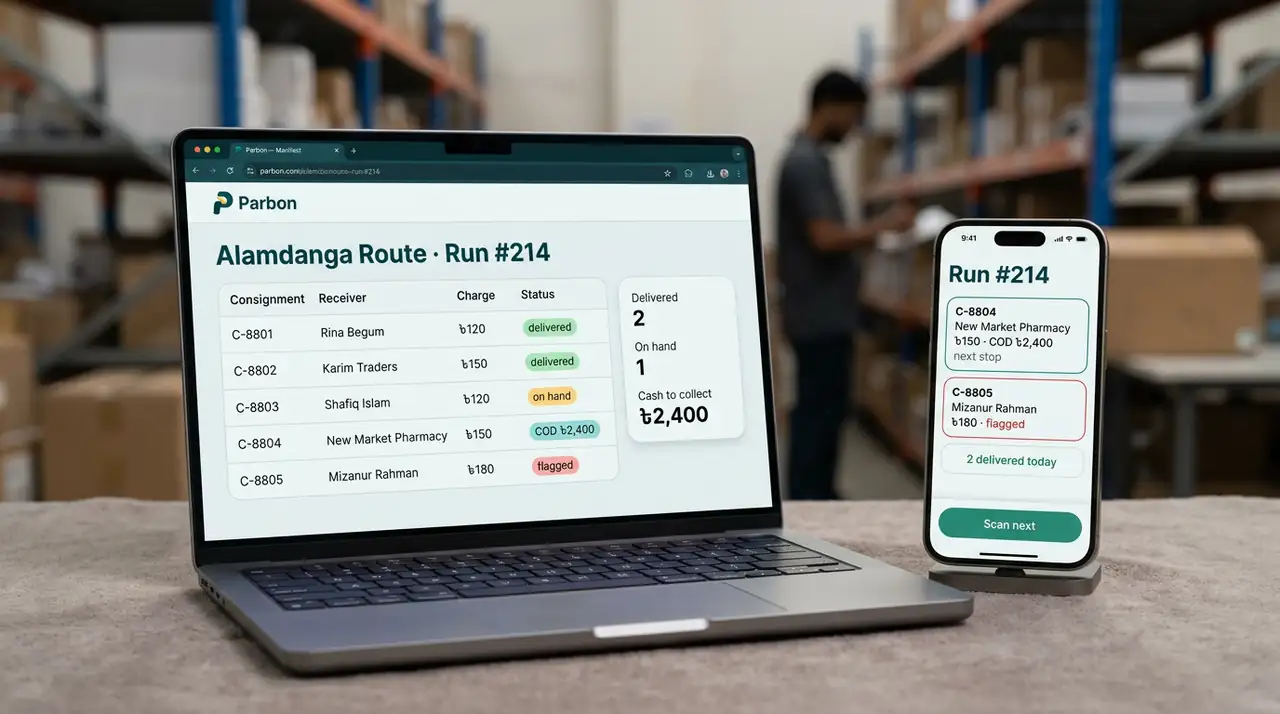
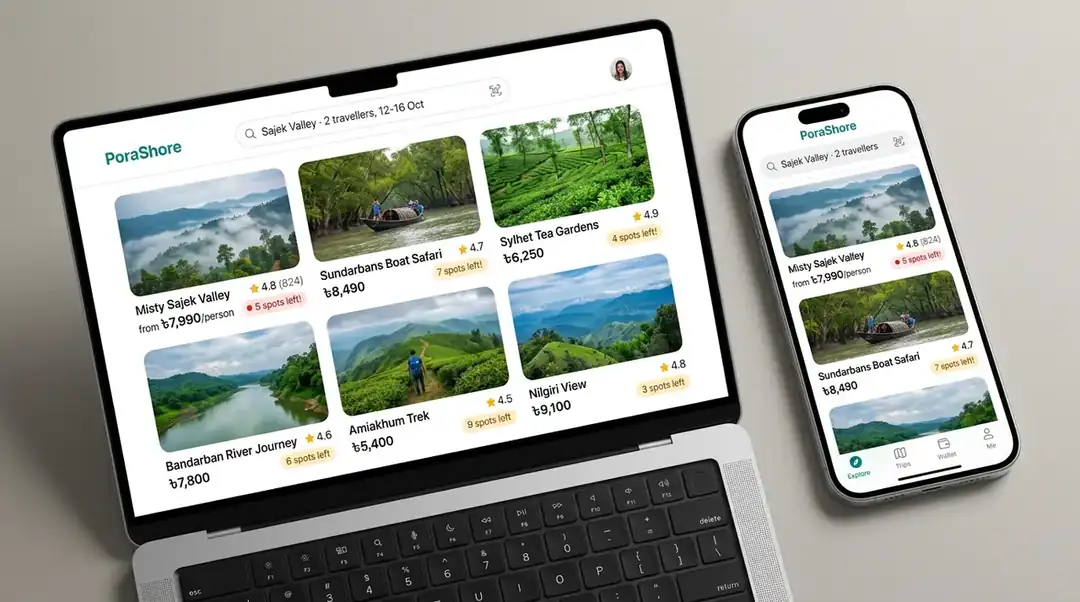
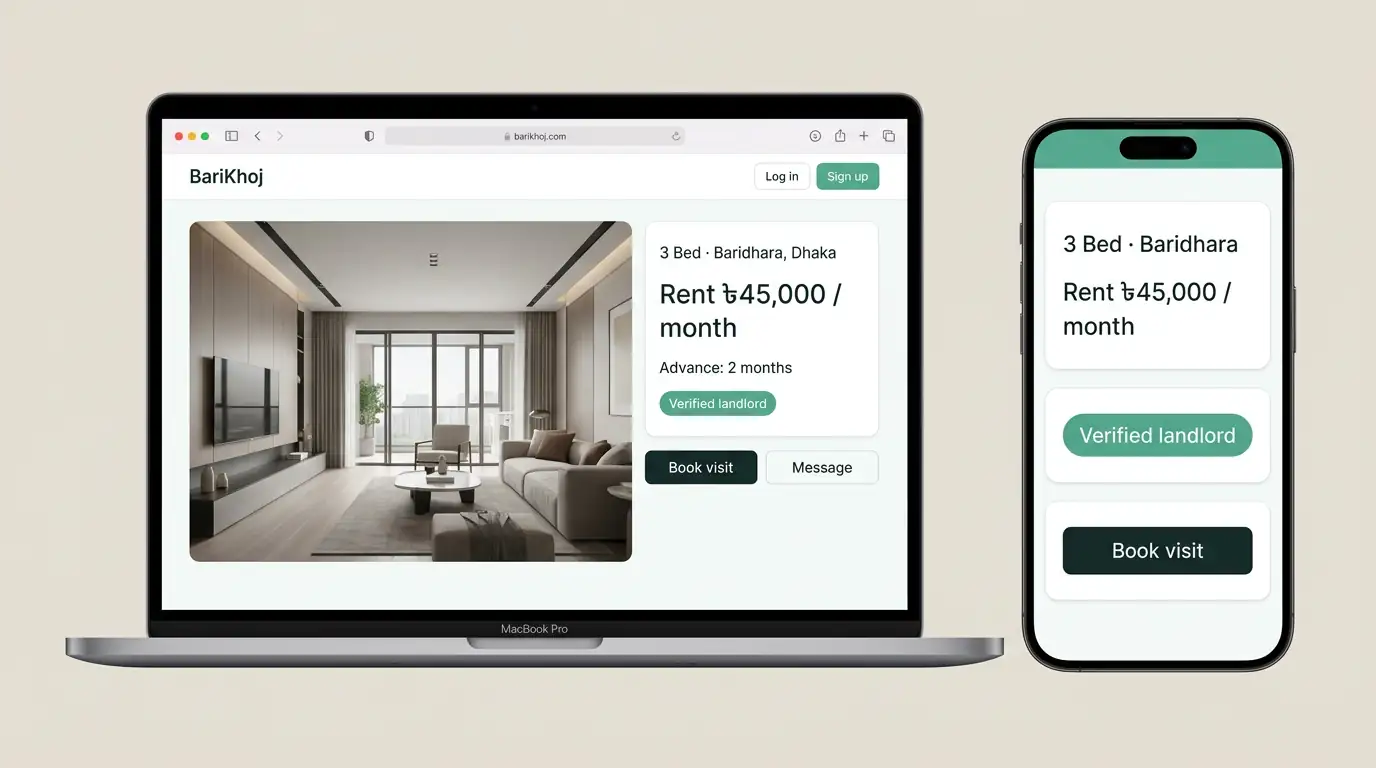
Frames of the live product rendered in the studio pipeline — the site itself is the demo: open anything, it is this codebase running.
The build
A mid-range restaurant in this country usually runs three unrelated systems that each think they own the truth: an ordering page or Facebook inbox out front, an iPad POS or paper docket at the counter, and a kitchen that gets orders by a shout. Bhuk is the opposite architecture: one order state machine with four faces — the customer's menu with live prep time, the kitchen's ticket board of status and elapsed minutes, the cashier's tile POS that reconciles every bill in front of the guest, and a dispatch view that hands riders the same states, batched. We earned the design standing in actual supper-club service nights, where a wrong number is a wrong plate and you learn fast. It is offered the same way every blueprint is: your venue, your accounts, your data exportable, one flat licence.
What we handled
- One state machine, four surfaces: every screen shows the same truth because it is literally the same object
- Menu with live prep — average kitchen time drives promised ETA, so “30–40 min” stops being fiction
- Ticket board built for a line cook: status word, elapsed timer, colour = urgency, zero reading required
- POS math shown in the open — subtotal, service, VAT, splits — the receipt and the screen never disagree
- Batched dispatch with COD flags: routes grouped by kitchen-ready time, not by random arrival order
- Menu import from whatever exists — photos, prices, variants — and outlets get their own rules inside one system
The ninth flagship blueprint was earned standing up: Bhuk is the food system this studio built while running its own supper-club nights — order, ticket, till, dispatch as one machine with four faces. Every restaurant knows the alternative: an inbox for orders, an iPad for bills, a shout for the kitchen, and a rider group chat holding the lies together. What follows is honest software for hungry rooms — including why every bill on this page adds up on camera, because in a kitchen, arithmetic you cannot see is arithmetic you cannot trust.
Three systems, zero shared truth
The anatomy of a bad Friday at a mid-range Dhaka restaurant is consistent everywhere: the ordering page accepts an order at 8:02, the cashier writes it on a docket at 8:04, the kitchen hears “table five plus a delivery” at 8:06, and the rider is messaged to come at 8:20 to find the food ready since 8:12 and the napkins not packed since never. Nobody is careless; the systems simply do not share a state, so the staff became the message bus, and message buses have peak hours.
Bhuk inverts the shape: one order object, four views. The customer's menu, the kitchen's board, the cashier's till and the dispatch list are projections of the same record — a tap anywhere moves everywhere within a blink. It is a decade-old idea in rich markets and treated as exotic here, and the exotic part is not the tech; it is refusing to ship the four faces until they agree. Every design decision in Bhuk starts from that refusal.
The menu is a kitchen promise
Ordering UI is commodity; the live prep time is the product. Bhuk watches the actual kitchen — average minutes per station, ticket load, current queue depth — and the menu states a promise it can keep: “avg 24 min · Live”, with the ETA recomputed when the biryani pot is three deep. Sellers hate this feature until their first Friday; refunds for blown windows drop because the window stopped being fiction.
Menu structure maps to how Bangladeshi kitchens actually cook: variants (spice level, rice swap), modifiers that decrement real stock, availability per daypart, and sold-out states the kitchen can flip from a phone because the line cook, not the marketing calendar, knows the Daab Chingri ended at 9.
A board a line cook reads at a glance
The kitchen display is the most opinionated surface here: no item paragraphs, no logos, one ticket per card — number, count, status word, elapsed timer — colour as the only other language (fire, cooking, ready, late). Everything else is a settings page the manager visits once a week. We watched our own kitchen ignore two “richer” prototypes before this one stuck, and the lesson went into the product: in the pass, reading is friction, and glance is truth.
Because tickets are state objects, not text notes, the same board drives the rider batching, the customer's “on the fire” notification, and the timing stats the owner sees Monday. The chef's phone carries the identical list — Mark served is one green thumbprint — because a kitchen that can walk can also keep answering questions from the pass.
The till shows its arithmetic
Bhuk's POS is tap tiles and an open ledger: items, subtotal, service percentage, VAT, total, splits — each line visible while it computes, on the owner screen and the guest phone together. Our own renders do this on purpose: ৳280 + ৳350 + ৳60 + ৳80 = ৳770, plus 5% service ৳39, plus VAT ৳77 = ৳886, split four ways ৳221.50 each. If a billing system cannot tolerate being read, it is not ready to be trusted.
Tenders are local and honest — cash drawer, bKash, card via SSLCommerz — and closing a bill writes the same record the kitchen, dispatch and the daily revenue sheet read, including the delivery orders whose COD is flagged into the rider's run and back into the settlement, so the till, the bag and the report cannot tell three different stories about the same taka.
Runners batched by the kitchen, not by luck
Dispatch in most venues is a group chat with a map screenshot. Here it is a queue grouped by ready-time: when tickets hit READY in a cluster, the batch exists — rider list with states, distance and COD flags per stop, one Start run on the phone. The system never invents an ETA it cannot defend; if the kitchen queue deepens, batches merge and customers see the honest delay because every face reads the same object.
Restaurants that run their own riders get the full board; those on the open courier fleets get a webhook out and a status back — Bhuk does not pretend to own the street. And the owner's Monday view closes the loop the Friday rush opens: on-time percentage, prep drift, COD float, refund reasons — numbers a system that shared its truth all week can afford to show.
Public record
- Blueprint status
- In-house flagship — proven on the studio's own supper-club nights; first restaurant pilots are the offer, priced like it
- One system, four faces
- Customer menu · kitchen display · front-of-house POS · rider dispatch — one order state machine
- Money
- Cash, bKash and card tenders, split-by-guest, COD flagged through dispatch and settlement
- Deploy shape
- Single venue live in 4–7 weeks including menu import; multi-outlet adds outlet rules in weeks
Under the hood — what each box took to build
Craft, per feature
One order object, four projections
Menu, KDS, POS and dispatch render the same state record with sub-second sync — the architectural reason this suite can promise that no screen ever contradicts another about an order.
Live prep ETA on the menu
Promise computed from station averages, queue depth and time of day, recomputed while the guest watches — the difference between “30–40 minutes” as marketing and as a contract.
Glance-first kitchen board
Status word + elapsed timer + colour, nothing else on the card; variants of the same design live on the chef's phone. Two richer prototypes were ignored by a real line before this one was not.
Transparent-tape POS
Tap tiles, open arithmetic, split-by-guest shown on the guest's device, cash/bKash/card tenders and receipts that match the ledger because they are the ledger, printed after the math is seen.
Ready-time rider batching
Dispatch groups orders as tickets hit READY, bakes COD and distance into the run, and hands riders one Start button — open-fleet venues get webhooks in and out instead of a fake owned street.
Menu import that meets you where you are
Photos, prices, variants and dayparts pulled from whatever the venue already keeps — a Drive folder, a Zomato page, a printed card — into structured stock-aware menus without a six-week data project.
Commissioning this shape of product
The plan, as we would propose it
Service shadowWk 1
Two dinner services on the floor with a notebook before any configuration: when tickets actually fire, where the shout system breaks, which bills get split. The venue's own Friday numbers become the success bar.
Menu + boardWk 2–3
Imported menu live with live-prep enabled on quiet days first; kitchen board parallel to paper for a week — the line decides it stays, which is the only adoption test we accept.
Till + dispatchWk 3–5
POS on the counter with tenders and splits proven against the drawer daily; batches, rider phone flow and COD reconciliation running through two weekends of real rush before the docket is retired.
Hardening + handoverWk 5–7
Sold-out and outage drills during service, staff training inside the live system, owner dashboard on their own revenue week, and the export contract demonstrated with the accountant in the room — boring on purpose.
What a client actually wins
Friday stops needing a supervisor
When four faces read one record, the “who told the kitchen?” class of problems disappears — the manager's rush role shifts from relaying to exception-handling, which is the job that was always theirs.
Promises you can keep on purpose
Live prep makes the ETA a computed output of the kitchen's own behaviour; venues trade a little false optimism for real refunds and review protection — the honest number compounds, the fake one collects interest against you.
The till that ends arguments
Visible arithmetic, guest-side split display and receipts born from the ledger mean nobody — staff, guest, accountant — reconstructs a bill again; disputes drop because everyone watched the same sum happen.
One licence instead of three subscriptions
Ordering platform fees, POS rental and dispatch tooling collapse into a single flat line with the venue's own payment rails inside it — the monthly statement reads like confidence, not like a toll booth.
What is not true (yet)
- Blueprint truth, served hot: Bhuk proved itself on the studio's supper-club nights — dozens of covers, real rushes, real burners — but there is no restaurant's year-one statement to quote yet; the first pilots are priced like the pioneers they are.
- It is not a delivery marketplace: integration out to the big apps is a sync surface, not a re-ordering pipeline, and venues should keep their direct channel — a system that makes your own ordering as smooth as a marketplace's is the strategy this product exists to enable, not the commission structure it competes with.
- Hardware reality is yours: printers, drawers and kitchen screens survive or die by the venue's power and dust; Bhuk degrades gracefully when a screen dies (phones carry the board) but it cannot legislate a router from 2014.
- Menu truth still needs a human: sold-out states, price changes and daypart edits are one-tap by design, and one-tap still means someone must tap — the system makes lying about stock impossible to sustain, not invisible.
Testimonial slot — reserved, not invented
The listing has no review wall to quote yet — so there is no quote here. Real, credited words move into this card as players leave them.
Sponsored placement — reserved, disclosure first
Placements & partners
This is where a genuinely used tool or partner link would live — hosting, device labs, our travel products. It ships empty and labelled on purpose: when a sponsored link arrives, it arrives wearing this disclosure, never dressed up as editorial.
Answers where they belong
Questions this project answers
Want Bhuk-class engineering for your idea?
One brief in, the composer arrives with your platforms pre-ticked — Android, iOS, web, admin.
Why is the bill math on the product images?
Because a billing system that cannot tolerate being read is not trustworthy: every Bhuk render keeps subtotal, service, VAT, total and splits arithmetically exact on both devices, and our acceptance test for any UI ships the same way — the numbers on screen must foot before the screen ships.
Do we have to replace our POS hardware?
No — Bhuk's till runs on the iPad or Android counter tablet you already argue with, and receipts print through the existing thermal via the same bridge your current setup uses. Hardware replacement is a vendor business, not ours.
How does the kitchen react when it falls behind?
The delay is a state, not a secret: tickets turn late, the menu's live ETA stretches, batches merge, and the Monday view shows the drift. What we refuse to build is the option to hide a backlog from the customer — the promise degrades honestly or the feature is removed.
Can our riders keep using their own apps?
Yes — venues with staff riders use the built-in dispatch board and phone flow; venues on open fleets get webhook sync out and status back. Bhuk's rule is it may not claim to own the street; it owns the order, which is the part with the money in it.
What happens when the internet dies mid-dinner?
The board and till keep serving from cached state and queue their writes like everything else we build for this country's lines; orders taken on paper during the gap enter with one screen. The drill is part of the handover week — we time it.
What does running it cost after launch?
One flat platform licence plus the venue's own payment-rail fees and SMS volume at carrier pass-through — no per-order percentage, because a system that taxes Friday's rush has a quiet incentive to never let the room run smooth. That incentive shape is the whole reason this product can promise what it promises.
Begin the ascent
Everything on this page is checkable.
Store listing, code craft, and the way we scope — click through and verify, then send us the brief.